Late spring olive blossom, the long heat of July, the gold light of September, the harvest in October. A month-by-month look at what each season actually feels like on the island.
Most people picture Korčula in July — blue sea, white pebble, glass of something cold. And that's not wrong; July is what the brochures sell because July sells. But the island has a different character in every month, and one of the small pleasures of returning is finding out what the place looks like outside its high season. Here's how a year on Korčula actually goes.
April — the slow opening
The island wakes up gradually. The first konobas open their doors for Easter and stay open for the few weekend visitors. Almond trees flower against still-bare hillsides. The sea is genuinely cold — fourteen, fifteen degrees — but the rocks warm up by midday and you can sit in the sun in a sweater. Walking weather. The villages are quiet enough that you'll exchange a real conversation in every café you stop at.
Bring layers. Days can be twenty degrees and bright; nights are still ten and breezy. A good month for the indoor side of the island: museums, churches, long lunches, the bell tower in Blato, the small art gallery in Korčula Town.
May — green
May is the green month. Wild flowers everywhere, the macchia heavy with new growth, the olive groves shockingly bright. The sea reaches seventeen, eighteen degrees by the end of the month — refreshing rather than warm. Most of the konobas are open by mid-May, the catamaran is on its summer schedule by the third week, and the island has the feel of a place stretching after a long sleep.
If you don't mind a cool swim and you want the island close to empty, May is the best month nobody books.
June — the first perfect month
By the second week of June, the sea is warm enough that you stop thinking about it. The days are long — light until nine — and the heat is still gentle, more honey than fire. Restaurants are open, prices haven't started peaking, and the catamarans aren't yet full.
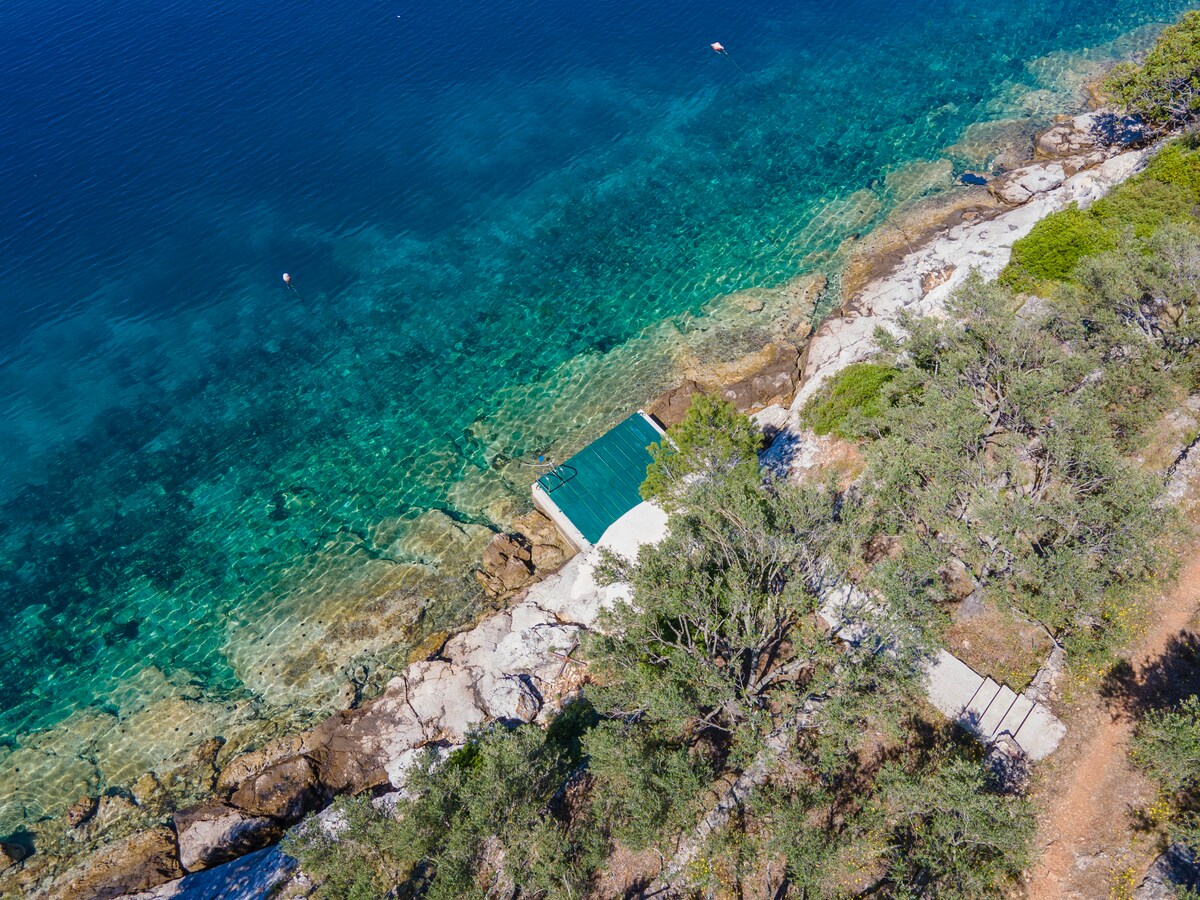
This is when I'd choose, if I had to choose. The bay below the villa is yours most mornings; the wine bars are open; the Adriatic at dusk is the colour you imagined when you booked.
July — high summer
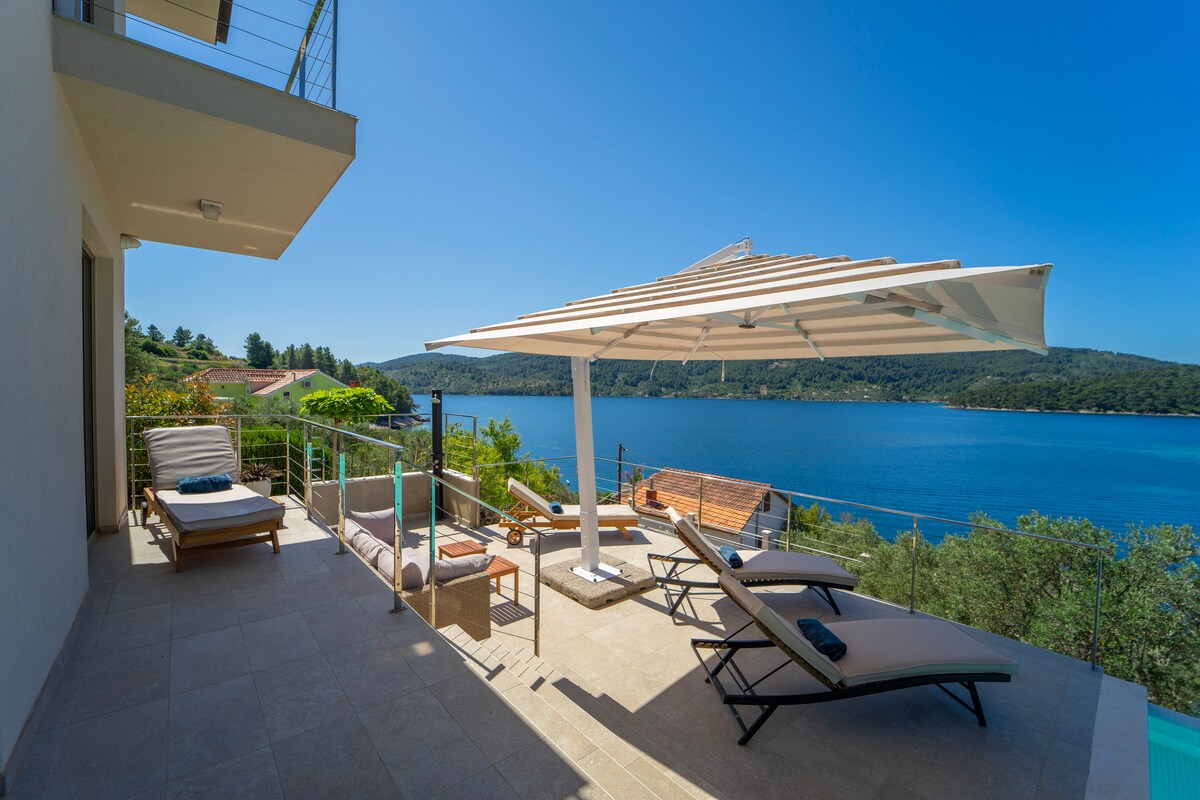
Hot, busy, brilliant. Sea at twenty-four, twenty-five degrees. Long days, late dinners, the harbour full of boats. Proizd is crowded by eleven; Pupnatska Luka has its own traffic problem. The villa is its busiest week of the year and the pool earns its keep.
If you're coming in July: book the catamaran weeks ahead, book the popular konobas the day before, and embrace the early morning. The island before nine is yours; the island after eleven belongs to everyone.
August — the deepest month
Everything that's true in July is more so in August. Hotter, more crowded, more glorious. The bura wind sometimes blows for two days at a stretch and the sea goes lapis blue. The harvest of the early grapes starts in the second half of the month. The locals work all hours.
August is also when the village fiestas happen. If you find yourself near a square on the right evening, stay. Eat what they hand you, drink what they pour, dance badly. It's the most authentic possible night out and you didn't plan a moment of it.
September — the second perfect month
If June is the first perfect month, September is the second, and possibly the better of the two. The sea is at its warmest of the year. The crowds thin out after the first week. Light goes longer and softer, and the photographs you take in September will be the ones you frame.
Restaurants start having time again. Producers in Smokvica will sit down with you. The pool is at its peak temperature. The whole island exhales.
October — harvest and weather
Olive harvest starts at the end of the month. The mills run day and night, the air around Blato and Smokvica smells of crushed olives, and you can taste this year's oil straight off the press. The sea is still around twenty degrees in early October, dropping by the end.
Weather becomes unpredictable. A still, hot week is one of the most beautiful experiences the island offers. A windy week with rain is a different holiday — long lunches indoors, candles, a book, the sea grey through the windows. Both are good, in their own way; the second is for guests who'll appreciate the quiet.
November to March — winter
Most konobas close. The catamaran from Split runs less often. The locals get their island back. There's a particular beauty in Korčula in winter — empty stone, slate-grey sea, long dinners around a fire — but it's a different proposition from the summer island and not really what Villa Belveder is built for.
So when should you come?
If you want the perfect classic week and don't mind crowds: late June or early July.
If you want warm sea and a quieter island: the first three weeks of September.
If you want the island closest to empty and you don't mind a cool swim: late May or early October.
If you want the most alive, loudest, most you-only-live-once version of the island: the middle two weeks of August.
Whichever you choose, give it at least a week. Anything shorter and you'll spend the first three days putting your work-brain down, and the last day already missing the place.