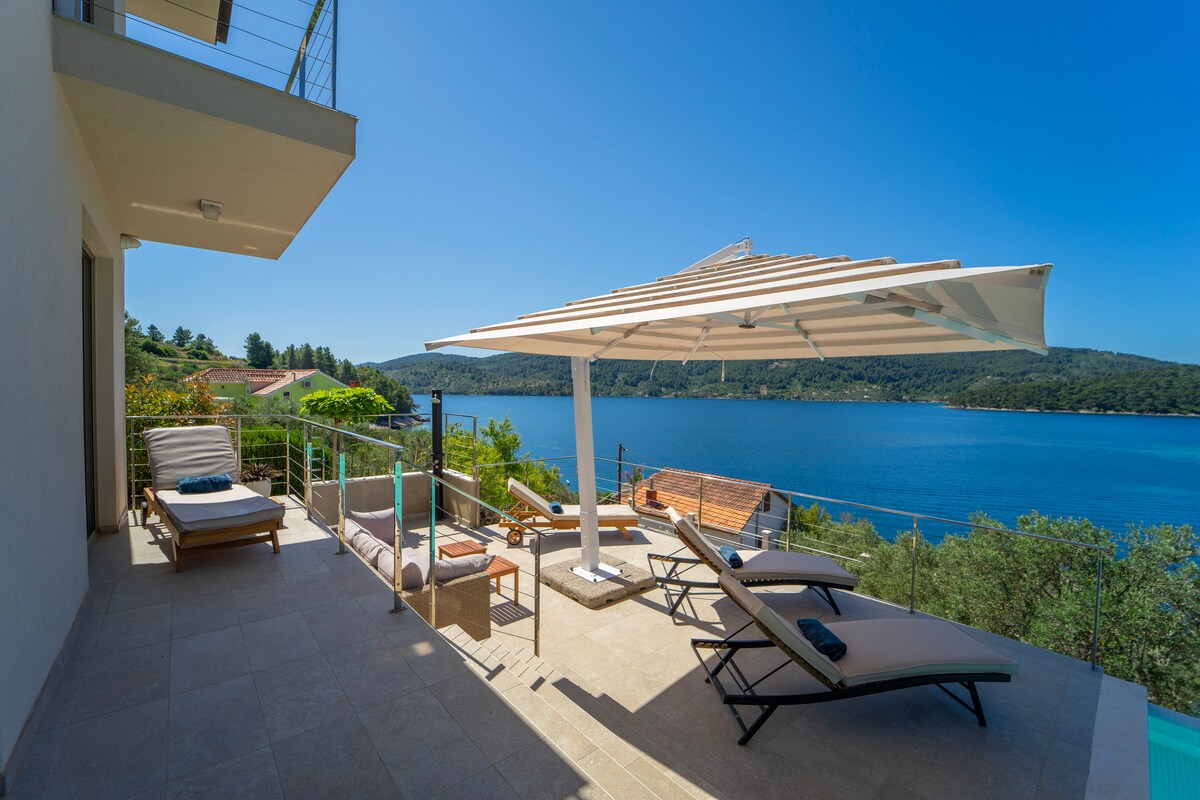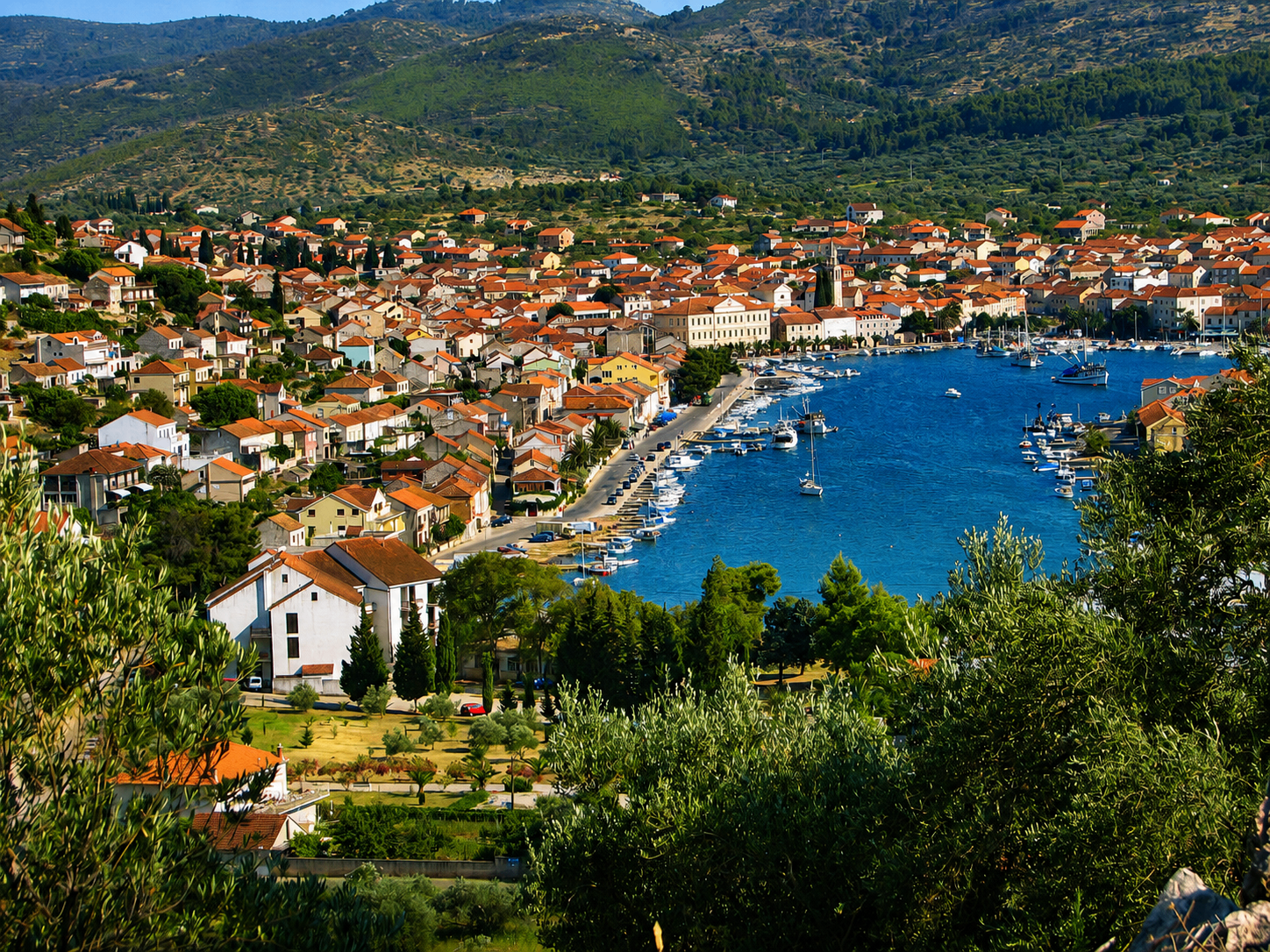
Honest, lived-in notes from hosting families at Villa Belveder in Vela Luka — which beaches work for which ages, why some families prefer the quiet western side, and what a slow week on Korčula actually looks like with kids in tow.
We host families at Villa Belveder most weeks of the summer, and the same handful of conversations happen every season. Parents arrive curious, slightly tired, and full of plans. By the third evening, the plans are quieter and the children are already at home in the pool. This is a guide written from those conversations — what works, what we'd skip, what we wish more families knew before they booked.
It's not a list of attractions. Korčula has plenty of those and you can find them elsewhere. This is the practical side: which beach to take a four-year-old to, when to do Korčula Town with a five-year-old who hates queues, why so many families end up preferring the quiet western side of the island, and what a week here actually looks like once you stop trying to optimise it.
Why Korčula works for families
Korčula is the right scale for a family holiday. The island is long but narrow — about forty-seven kilometres end to end, eight at the widest — and most things you'll want to do are within thirty or forty minutes of wherever you sleep. That alone changes the trip. No two-hour drives back from dinner with a four-year-old asleep on someone's shoulder. No half-day transfers eating into your week.
The water is calm. The Adriatic around Korčula has no real tide, almost never has waves, and warms up to a swimmable temperature by the second week of June. Most of the coast is pebble or smooth rock rather than sand, which sounds like a downside until you realise how clear the sea stays as a result. Reef shoes from any supermarket solve the only real friction (some entries have urchins on the rocks); after that, you have an island full of safe, gentle bays.
There is also one true sandy stretch on the island — Vela Pržina near Lumbarda at the eastern tip — and a few softer pebble-and-sand coves on the western side. We'll come back to those.
The honest caveat: Korčula Town is car-free inside the medieval walls, which is wonderful, but the streets are stone, uneven, and include steps. Strollers are a fight. With a toddler, bring a carrier and skip the stroller inside the walls. Outside the walls, it's straightforward.
The beaches families actually use
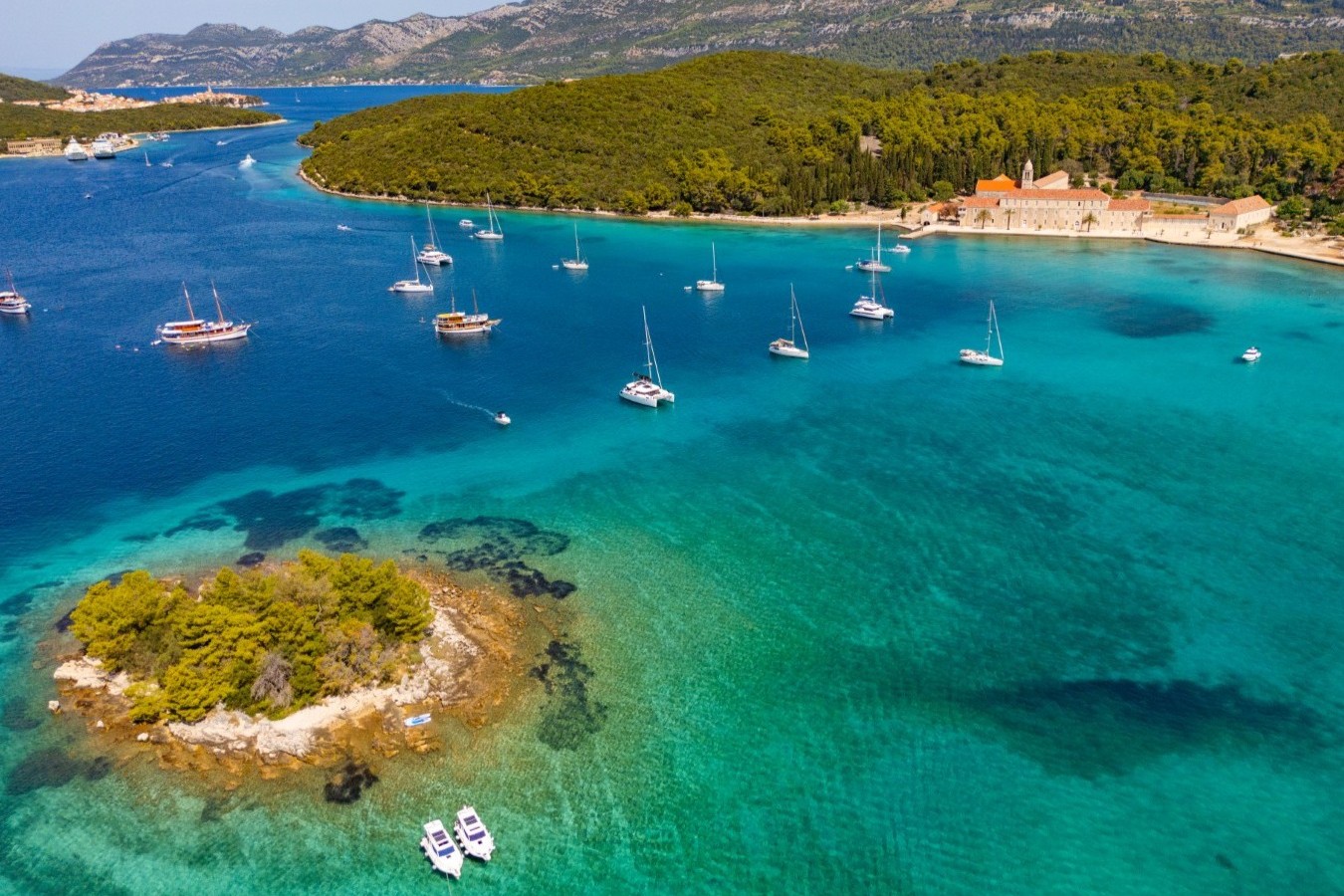
Guests usually arrive imagining one perfect beach. After a few days the picture changes — different beaches work for different moods, ages and times of day. The pattern that emerges, almost every week:
**The morning bay.** For families staying at Villa Belveder, this is Mikulina Luka, the white-pebble cove two minutes below the house. It's glassy until about ten, the entry is gradual, and the kids learn it on the first afternoon. Most weeks, this ends up being the most-used beach of the trip.
**The big beach day.** Proizd, the small protected islet reached by taxi boat from Vela Luka harbour (about ten minutes across, ten to twelve euros return per person, cash). The water there really is something — pale pebbles on the bottom give the sea an almost unreal turquoise. Go on the 09:00 boat, bring more water than you think, stay until you've had enough sun. Kids from about five upward love it. With toddlers, we'd save Proizd for a half-day and not the full one.
**The easy family beach.** Plitvine, ten minutes east of Vela Luka — a sheltered pebble cove with a gentle entry, morning shade, a tiny konoba on the sand, and a flat path from the car park to the water. The single easiest beach for parents with small children in our area.
**The sandy one.** Vela Pržina near Lumbarda, on the far eastern side of the island. It's about an hour and fifteen by car from Vela Luka, so it's a day trip rather than a regular stop. If your kids are determined to build sandcastles, this is where you take them. Pair it with lunch in Lumbarda and an early evening walk through Korčula Town on the way home.
We've written a fuller, slower guide to all of these in The 9 best beaches near Vela Luka — it's the document we send most families before they arrive.
Korčula Town with kids
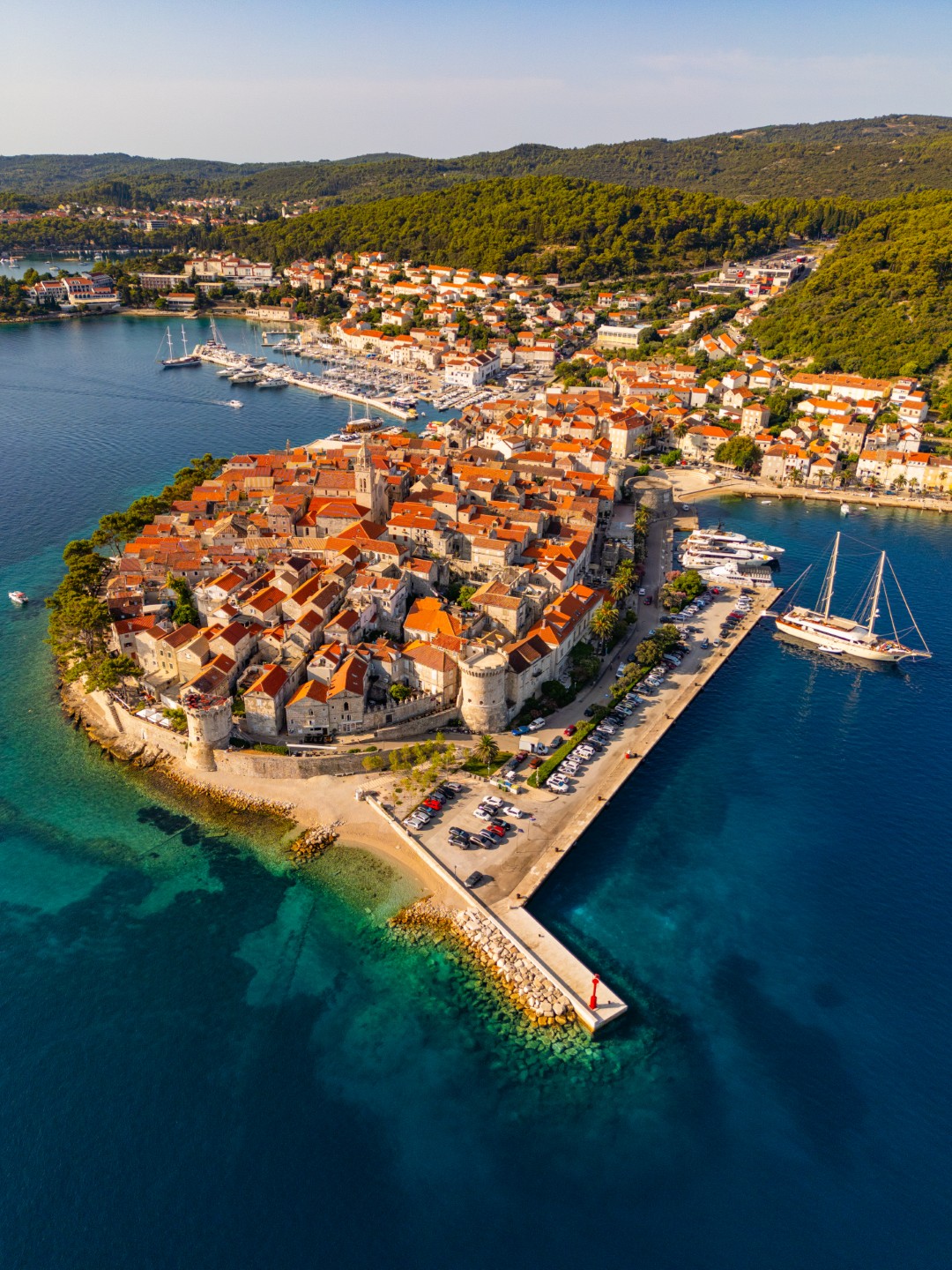
Korčula Town is genuinely lovely and worth a day, sometimes two. The trick with children is timing. The Old Town is a small, dense, sun-baked stone peninsula — between 11:00 and 16:00 in July and August it gets warm, busy, and the queues at the Marco Polo tower get long. We tell guests to either arrive early (09:30, walk the walls, do the cathedral, eat ice cream, leave by noon) or come for the late afternoon and evening, which is when the town is at its best anyway.
Park outside the walls — the lots along the eastern marina are easiest with kids — and walk in. Inside, the streets are short enough that nobody gets lost. The Marco Polo tower is, yes, a bit of a tourist set-piece, but kids genuinely enjoy the steep climb and the rooftop view. The Moreška sword dance, performed on summer evenings, is the rare cultural night out that actually engages children — it's loud, choreographed, and the young performers are local. If you can match it to your week, book early in the trip; kids talk about it for the rest of the holiday.
For food with children, the konobas around Plokata square serve straightforward grilled fish and pasta and won't blink at a six-year-old needing dinner at six. For something quieter, walk five minutes east along the seafront and you're past the main crowd. The drive back to Vela Luka after dinner, windows down, sleeping kids in the back, is one of the small pleasures of a week here. More on the island's evening life in Authentic Korčula.
Why families often prefer Vela Luka
When families first start planning, almost everyone assumes Korčula Town is the obvious place to stay. It's the most photographed part of the island and the easiest to picture. So this part of the conversation surprises people every season — but it's the most consistent feedback we get from families who choose the western side instead.
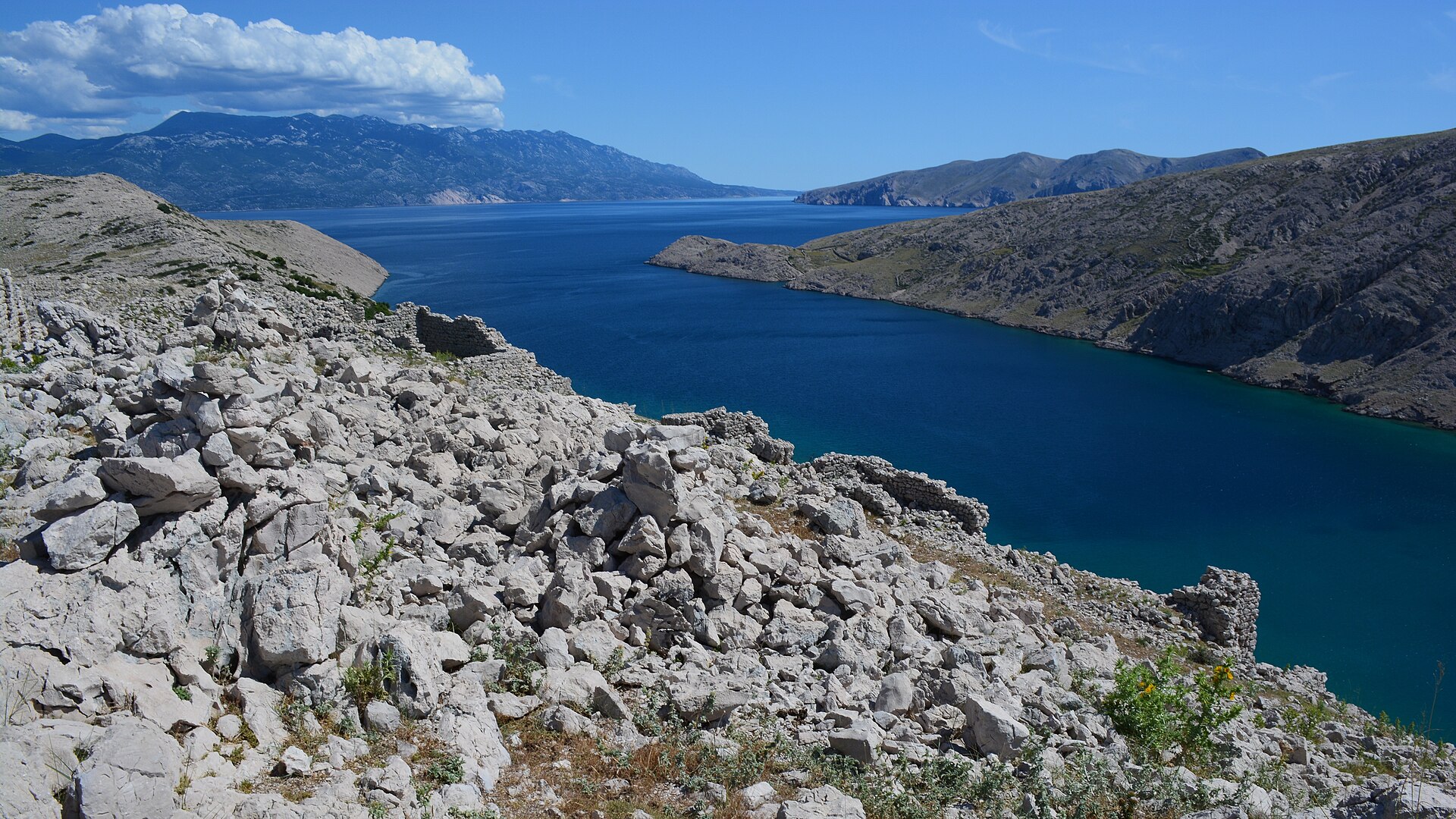
Vela Luka is the small town at the western end of the island, an hour's drive from Korčula Town. It's a working harbour, not a resort, with a long sheltered bay, a quiet riva, two supermarkets, a handful of good konobas, and not much in the way of nightlife. For families, that turns out to matter.
Parking is genuinely easy. The roads are quiet enough that an eight-year-old can cycle to the bakery. Traffic noise — the constant background of most Mediterranean summer towns — is largely absent. The bays around Vela Luka, including the one below Villa Belveder, are private or near-private rather than public-beach busy. The sunsets on this side of the island, facing west across open water toward Lastovo, are properly long and slow; people stop what they're doing to watch them.
None of which makes Korčula Town worse. It's a denser, livelier, more historic experience and we'd never tell a guest to skip it. But for a family with young children who want a week of actual decompression, a quieter base with a pool, private sea access, and short drives to the major sights tends to suit better than staying inside the busier eastern half. The pattern we see: families spend more evenings at the villa than they planned, more mornings in the bay than they planned, and almost always book a longer stay the next time.
Things families usually ask us before arriving
These come up almost every week. The honest answers:
**Do we really need a car?** For a week, yes. The bus network works but it's infrequent, and with kids you'll want the flexibility for beach days, supermarket runs and the drive to Korčula Town. Rent something small — the roads are narrow.
**Which beaches do your guests visit most?** Mikulina Luka right below the villa (every day), Proizd (once or twice), Plitvine if there are small kids, Pupnatska Luka for one big day. Korčula has plenty more, but most families end up rotating these four.
**How many days should we stay?** A week is the sweet spot. Three or four nights is not enough — you'll spend the first two adjusting. Ten nights is even better if you have it; the second week is when the holiday really lands.
**Is Vela Luka too quiet for a family?** It's the question we hear most, and the answer is almost always no. There are restaurants, a small playground, ice cream, evening swims, a fish market in the morning. What there isn't is bars-and-music nightlife — which, with kids, isn't usually what you're booking for.
**Is Korčula suitable for toddlers?** Yes, with sensible planning. The bays are calm, the villages are safe, the food is simple enough that picky eaters cope. Bring reef shoes, a carrier rather than a stroller for the Old Town, and accept that some afternoons will just be pool-and-nap. That's the holiday, not a failure of it.
**Is the island difficult to explore with kids?** Not at all. Distances are short, the main roads are good, and most viewpoints and konobas are within thirty minutes of the villa. The hardest part is choosing what to skip.
A typical week at Villa Belveder

What follows isn't a recommendation — it's just what most weeks here actually look like, watched across many seasons. Treat it as a baseline; you'll shape your own version by day two.
Day one — arrival, pool, early sleep
Most families arrive in the late afternoon on the Krilo catamaran from Split. By the time the bags are inside and the shutters are open, the kids have spotted the pool and that's the rest of the afternoon decided. Don't try to do anything else. Walk down to the bay before dinner, dip toes, eat something simple on the terrace, be in bed by ten. The first night here, everybody sleeps deeply.
Day two — a slow morning, then Vela Luka
Late breakfast on the terrace. Long swim in the bay before the sun comes around. Wander into Vela Luka mid-morning — the fish market, the bakery, an ice cream by the harbour, a slow look at the boats. Lunch back at the house. Long afternoon between pool and bay. By evening you'll already feel further from home than the calendar suggests.
Day three — Proizd
The big beach day. Catch the 09:00 taxi boat from the western end of the Vela Luka riva. Bring everything — water, snacks, reef shoes, a hat for everyone, sunscreen you actually trust. Spend the day in the coves, eat grilled fish at the small island restaurant, come back on a late afternoon boat slightly sunburnt and very quiet. The kids will be asleep on the drive back.
Day four — Korčula Town
Drive across the island in the morning while it's still cool. An hour and a bit through pine forest and vineyards — half the pleasure is the road. Walk the Old Town before the heat, climb the Marco Polo tower, have an early lunch, and either drive back for a pool afternoon or stay for the late afternoon and an early dinner on Plokata square. If a Moreška performance lines up with the date, see it; the kids will remember it longer than any beach.
Day five — a proper beach day
Plitvine for families with younger children, Pupnatska Luka for those with older ones, or back to Mikulina Luka and don't move all day. Lunch on the terrace, afternoon nap, evening swim. The middle of the week is when the holiday actually starts feeling like one.
Day six — do nothing
The most important day. No alarm, no plans, no agenda. Late breakfast becomes brunch becomes a long swim. The kids will play together in the pool for hours and nobody will look at a phone. Cook on the terrace in the evening. Stay up just late enough to see the stars come out over the bay. This is the day people remember years later.
Day seven — the last sunset
Last morning swim. Slow pack. A late lunch somewhere with a view. Down to the jetty in time for the sunset, the last one of this trip. Most families don't say much during it — there isn't really anything to say. The next morning they're on the early catamaran back to Split already half-planning the next visit.
What we've learned from hosting families
A few patterns that show up almost every season:
**Families plan too much before arriving.** The spreadsheet, the day-by-day itinerary, the list of must-sees — they almost always get abandoned by day three, and the families who hold onto them are the ones who don't quite relax. The island rewards loose plans.
**Children settle faster than parents.** Within twenty-four hours, most kids stop asking what's next. They know the pool, they know the bay, they know where the cold drinks are. The parents take a day or two longer to catch up; the holiday really begins when they do.
**Guests spend more time at the villa than they expected.** Most families arrive imagining six days of activities. By the middle of the week they've reorganised around long mornings at home and a single outing per day, and they're happier for it. The villa isn't a place you sleep between excursions; it's the centre of the trip.
**The quiet surprises people.** Vela Luka is quieter than guests expect, and they almost always say so by the end of the week — as a compliment. The lack of background noise is something modern families don't get many chances to experience.
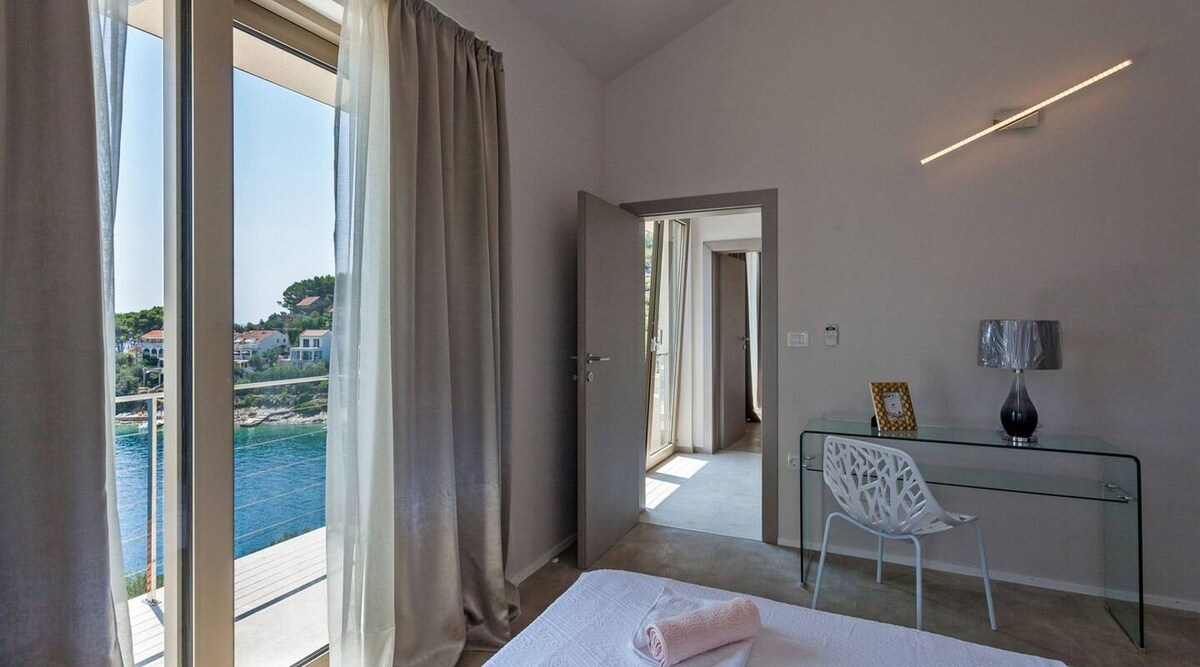
**Privacy and space matter more than the brochures suggest.** Having room for everyone to find their own corner — a parent reading by the pool, a teenager on a lounger, kids on the lawn — changes the dynamic of a family week. It's what villa holidays do that hotels can't.
**The week passes faster than anyone expects.** Almost every family says it on the last morning. The honest fix is to come for longer next time, which a lot of our guests do.
Planning your week
When to come matters more for families than for couples. For young children, the heat in late July and August is real — we'd choose the second half of June or the first three weeks of September if school schedules allow. The sea is warm in both, the island is quieter, and the days are still long. July and August are wonderful too if you accept early mornings and pool afternoons.
Getting here is easiest via Split: fly into Split airport, taxi or bus to the ferry terminal, and take the Krilo catamaran direct to Vela Luka (roughly two and a half hours, sit on the right for the view). It's possible from Dubrovnik too, but the route is longer.
If you'd like more on the island itself — the konobas, the wine, the corners worth driving to — our Korčula island guide covers it season by season. For a slower, adults-orientated version of the same week, see A relaxing week on Korčula. For when to come in more detail, Korčula by season. More stories are on the blog.
When you're ready, get in touch and we'll help you choose dates and answer anything you want to ask before booking. We reply to every inquiry personally, usually within a day.